
Introduction to the Recipe
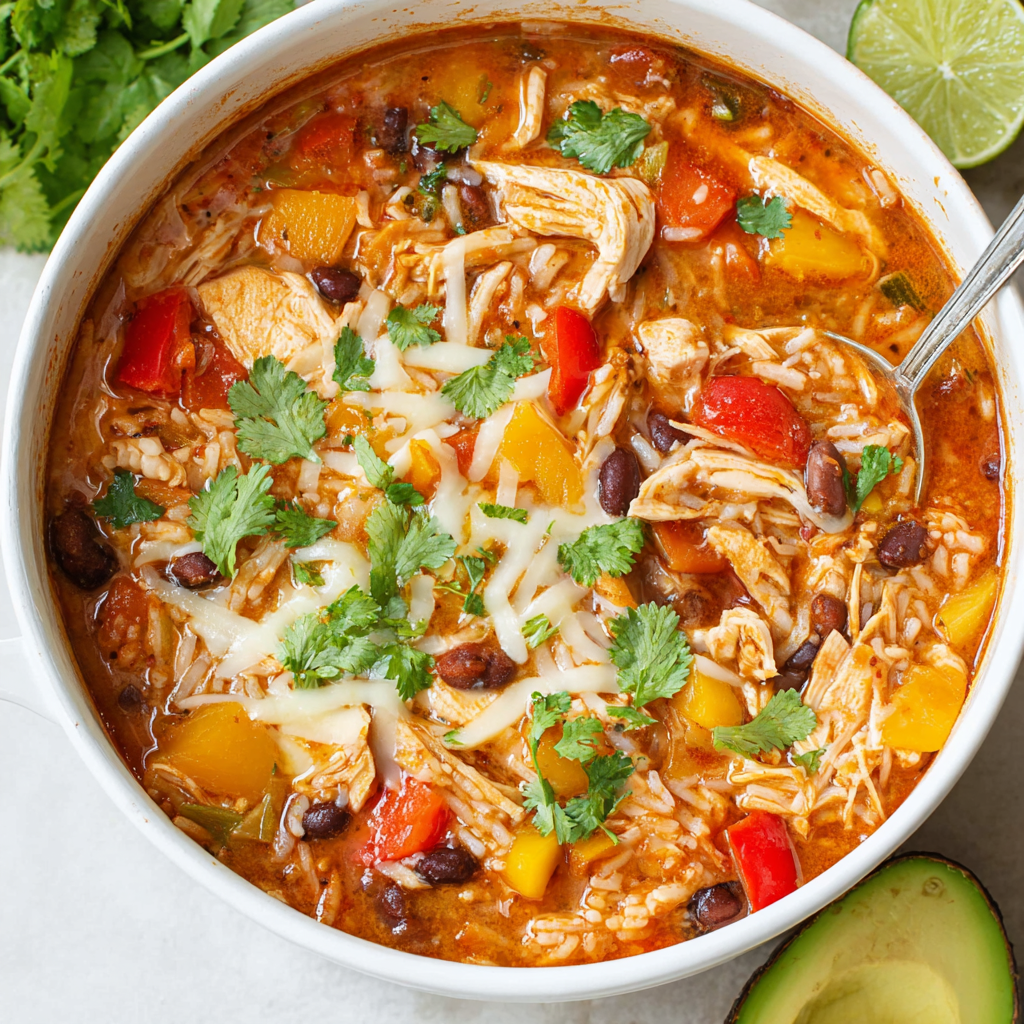
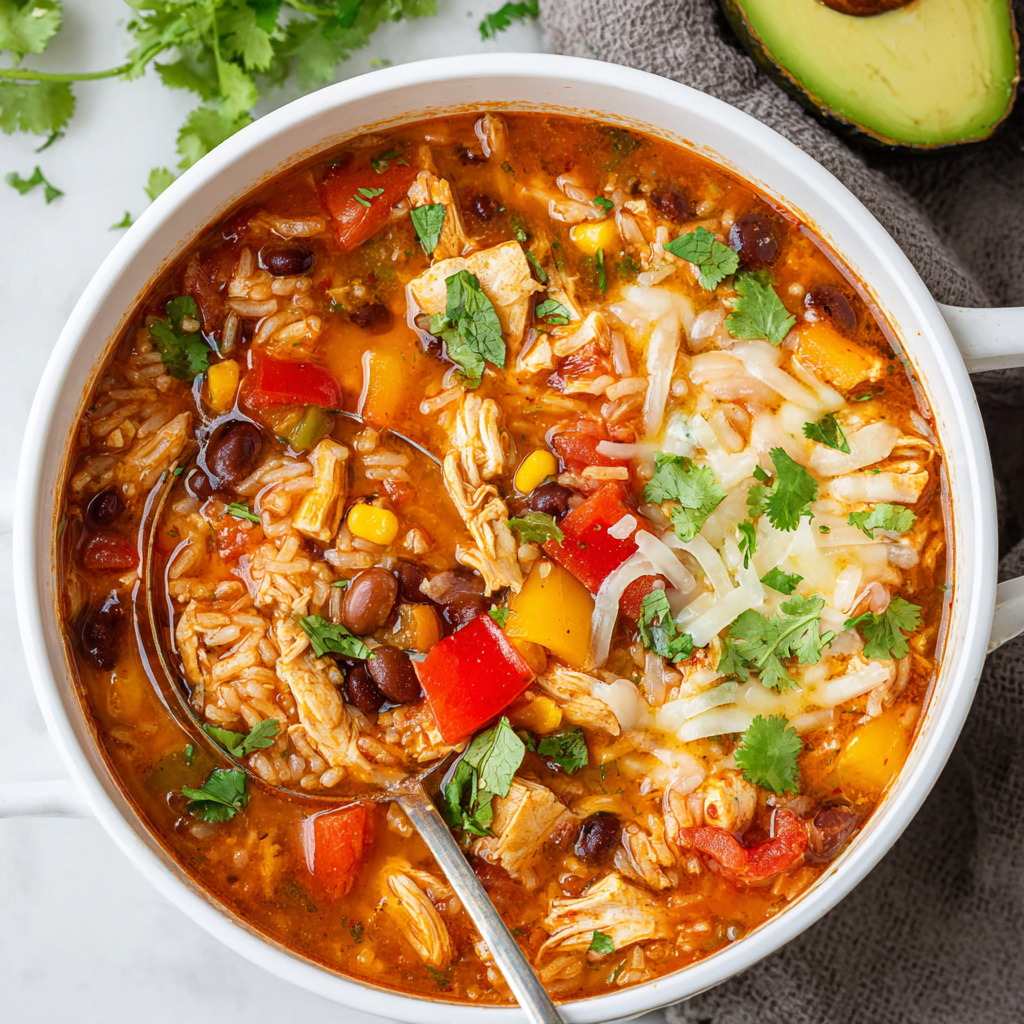
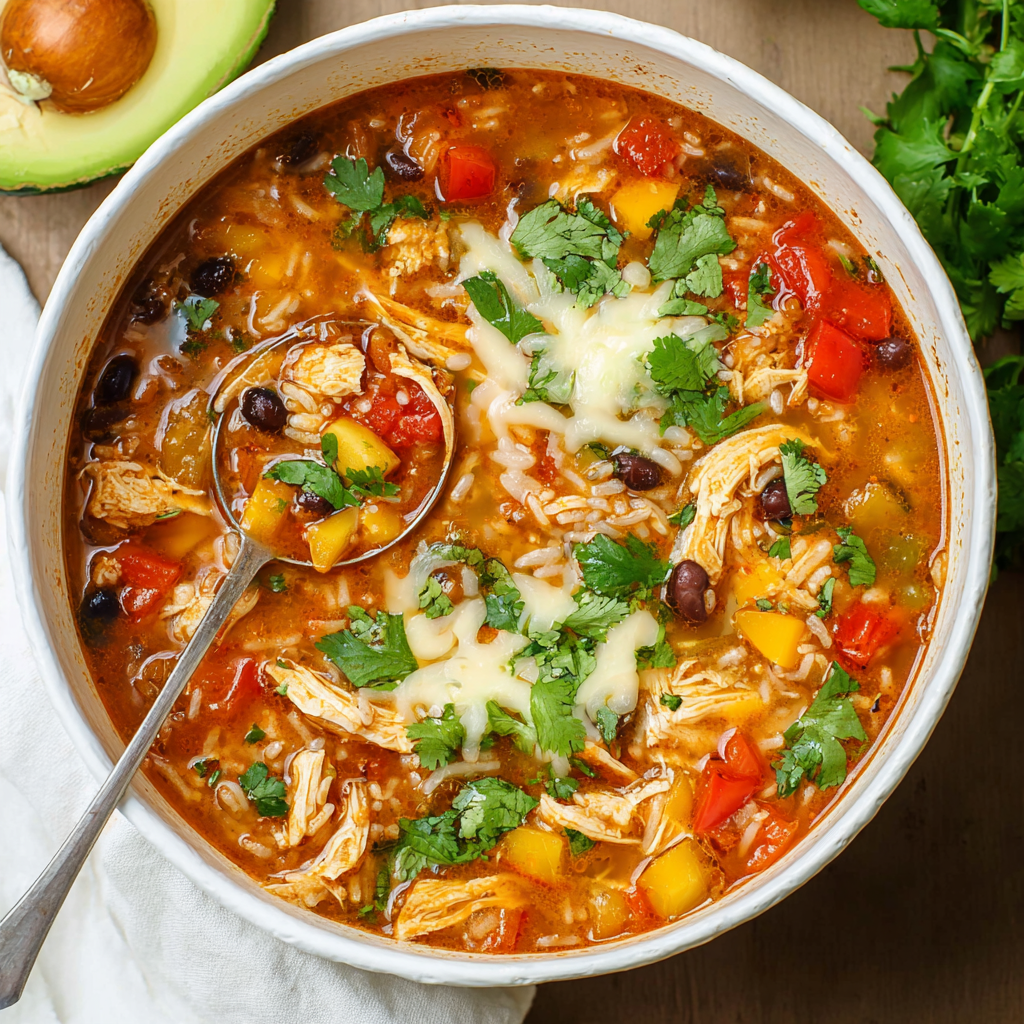
If you’ve been craving a comforting, flavor-packed soup that brings together all the sizzling goodness of classic fajitas in a warm, one-pot meal, then this Chicken Fajita Soup will immediately become a new favorite in your home. Combining tender chicken thighs, vibrant bell peppers, fragrant spices, creamy Pepper Jack cheese, and satisfying long-grain rice, this soup delivers depth, color, heat, and heartiness in every spoonful. It’s the perfect marriage of Tex-Mex flair and cozy soup comfort—a dish that’s bold and exciting yet familiar enough to become part of your regular rotation.
This recipe celebrates the best elements of fajitas: smoky seasonings, sautéed peppers and onions, juicy strips of chicken, and layers of savory richness. But instead of serving them in tortillas, the flavors simmer together in a vibrant broth enriched with tomatoes, green chilies, and creamy melted cheese. The addition of rice gives body and substance, turning what could have been a light soup into a deeply satisfying full meal. Whether you’re feeding a hungry family, cooking for chilly weather, or meal-prepping for the week, this soup delivers exceptional results every time.
If you enjoy exploring Tex-Mex flavors at home, check out this guide to essential spices and seasonings from Chili Pepper Madness: https://www.chilipeppermadness.com/poblano-peppers/. And if you need a refresher on selecting the best chicken cuts for soups, Serious Eats offers a helpful breakdown here: https://www.seriouseats.com/best-chicken-cuts-for-soup. These resources can help elevate your understanding of the flavors and techniques that make recipes like this shine.
This Chicken Fajita Soup stands out not only because it’s comforting and delicious, but because it’s highly customizable. You can adjust the heat level, play with toppings, modify the protein, swap the starch, or even turn it into a creamy soup with just a few simple tweaks. With its vibrant colors, satisfying textures, and restaurant-quality depth, this dish is exciting to serve yet simple enough for everyday cooking.
Basic Recipe: Ingredients & Instructions
Print
Chicken Fajita Soup Recipe – Bold, Comforting & Flavor-Packed
Description
Bold, hearty Chicken Fajita Soup loaded with peppers, rice, spices, and cheese. A cozy, flavorful one-pot meal your family will love.
Ingredients
Soup Base
- 2 tablespoons olive oil
- 1 tablespoon butter
- 1 pound chicken thighs, thinly sliced into 2-inch pieces
- 1/2 large onion, thinly sliced
- 1 red bell pepper, thinly sliced then halved
- 1 orange bell pepper, thinly sliced then halved
- 1 yellow bell pepper, thinly sliced then halved
- 4 cloves garlic, minced
- 2 tablespoons flour
- 2 teaspoons chicken bouillon powder
- 1 tsp EACH salt, chili powder, ground cumin
- 1/2 tsp EACH smoked paprika, pepper, dried oregano
- 3/4 cup long-grain white rice (recommended: basmati)
- 1 (15 oz) can black beans, rinsed and drained
- 1 (4 oz) can mild diced green chilies
- 1 (14 oz) can crushed tomatoes
- 4 (14.5 oz) cans low-sodium chicken broth
- 2 tablespoons cornstarch
- 1 cup freshly grated Pepper Jack cheese (or more to taste)
Garnish
- Tortilla chips or strips
- Fresh cilantro
- Sour cream
- Avocados
- Tomatoes
- Lime juice
- Hot sauce to taste
Instructions
- Sear the Chicken
Heat olive oil and butter in a large pot over medium-high heat. Add sliced chicken thighs and cook until lightly browned. Remove and set aside. - Sauté Peppers & Onions
Add onions and all bell peppers to the pot. Cook until softened and lightly caramelized, about 6–8 minutes. - Add Garlic & Spices
Stir in garlic, chili powder, cumin, smoked paprika, oregano, salt, and pepper. Cook 1 minute to bloom the spices. - Add Flour & Bouillon
Stir in flour and bouillon powder. Mix until vegetables are fully coated. - Add Liquids
Pour in crushed tomatoes and chicken broth. Stir to remove any browned bits from the bottom. - Add Rice & Chicken Back In
Return the chicken to the pot and stir in the rice, black beans, and green chilies. - Simmer the Soup
Bring to a boil, then reduce heat. Cover and simmer 20–25 minutes, or until rice is tender. - Thicken the Soup
Whisk cornstarch with a splash of water to make a slurry. Stir into the soup and simmer 5 minutes. - Add Cheese
Reduce heat to low and stir in Pepper Jack cheese until melted and creamy. - Serve with Garnish
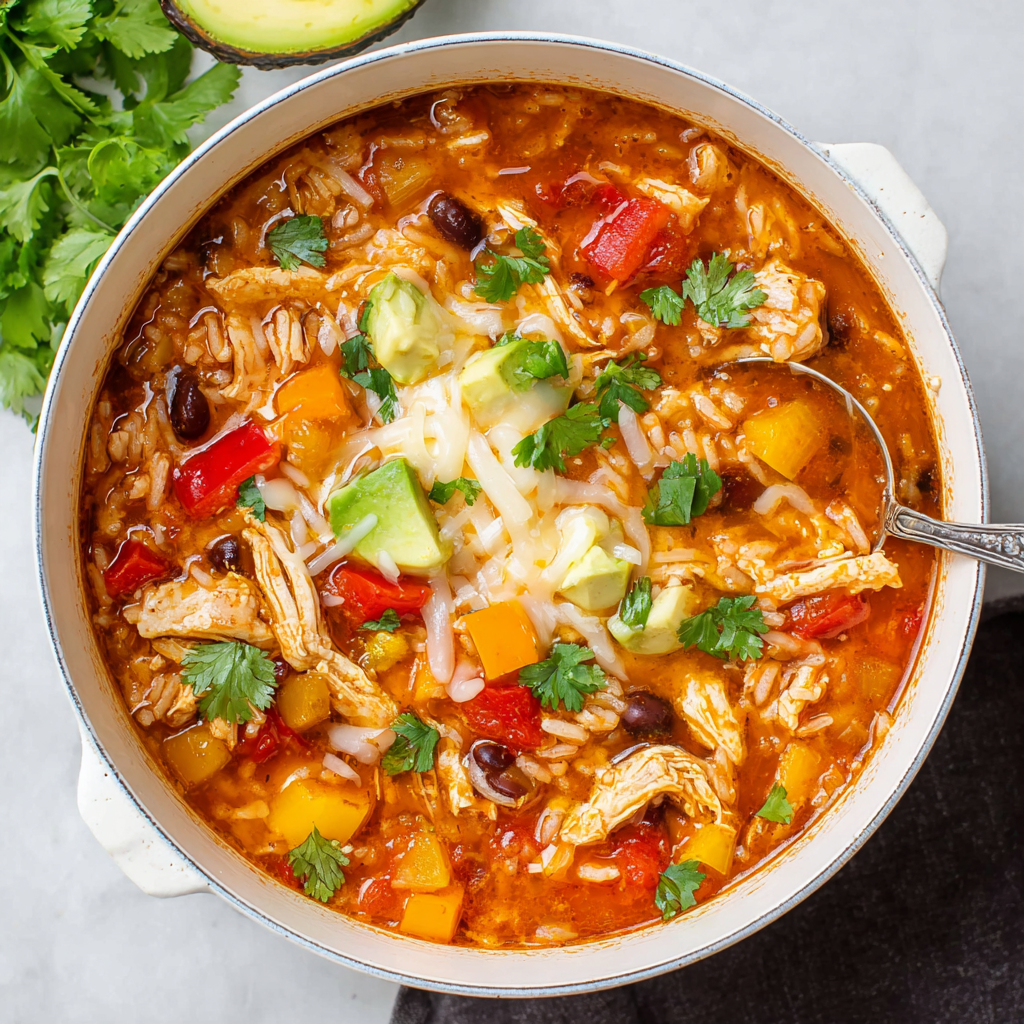
Ladle into bowls and top with cilantro, tortilla strips, sour cream, avocado, tomatoes, lime juice, or hot sauce.
Notes
Use chicken thighs for tenderness; breasts tend to dry out.
Grate your own cheese—it melts more smoothly.
Add extra broth if you prefer a thinner soup.
Advanced Techniques
1. Layering Fajita Flavor for Maximum Depth
Creating a truly bold fajita-style soup requires layering flavors at the right times, rather than adding everything at once. Browning the chicken first creates a foundation of savory richness while building fond—the caramelized bits on the pot—that later dissolves into the broth. Sautéing the peppers and onions until softened but slightly charred replicates real fajita flavor. Blooming the spices in oil activates their fragrant compounds, ensuring your soup tastes vibrant and complex rather than muted. These steps work together to replicate the depth of restaurant-style fajitas in soup form.
2. Using Cornstarch and Cheese for a Velvety Texture
A great fajita soup should feel luxurious, not watery. This recipe uses two thickening agents—cornstarch and melted Pepper Jack cheese—to create a creamy, cohesive consistency. Cornstarch provides body without altering flavor, while cheese melts into the broth, giving it richness and a subtle creaminess. To prevent clumping, always dissolve cornstarch in cold water first. Add cheese off the heat to avoid separation. This technique transforms the soup from a broth-based dish into a velvety, cohesive bowl of comfort.
3. Caramelizing the Vegetables for Sweetness & Char
The signature flavor of fajitas comes from the slightly smoky sweetness of charred peppers and onions. Allowing the vegetables to cook uncovered until they develop golden edges intensifies their natural sugars and enhances the soup’s overall depth. This method mimics restaurant fajitas cooked on cast iron griddles. Avoid stirring too frequently—let the peppers sit and caramelize before turning. The difference between sautéed vegetables and properly caramelized vegetables is huge, especially in a soup where their flavor heavily influences the final profile.
4. Perfect Rice Texture Through Controlled Cooking
Rice plays a crucial role in thickening the soup and giving it heartiness, but it can easily overcook if not handled properly. Long-grain rice like basmati holds its shape better than short-grain varieties, which become mushy. Adding rice after the soup reaches a simmer ensures even cooking. Don’t over-stir once the rice is added—this breaks the grains and releases starch prematurely. If you anticipate leftovers, undercook the rice slightly so it remains firm after reheating. These small steps ensure your soup maintains structure and texture.
5. Achieving Balanced Heat Without Overpowering the Dish
Fajita flavors rely on warmth rather than aggressive heat. To maintain balance, this recipe uses smoked paprika, chili powder, cumin, and mild green chilies. If you want to increase heat, use chipotle peppers in adobo, a dash of cayenne, or hotter green chilies. Add spicy elements gradually and taste as you go—the broth intensifies after simmering. For an extra kick with control, swirl in hot sauce right before serving. This approach gives you heat that complements the soup rather than overwhelms it.
Storage, Shelf Life & Maintenance Tips
1. Proper Refrigeration for Best Freshness
Chicken Fajita Soup stores beautifully in the refrigerator for up to 4 days. However, because rice continues absorbing liquid, you may notice the soup thickening over time. You can prevent this by slightly undercooking the rice initially or storing cooked rice separately and adding it to each serving. Store the soup in an airtight container once cooled. For reheating, add a splash of broth or water to restore the desired consistency. Refrigeration allows the flavors to deepen, often making the soup taste even better the next day.
2. Freezing Tips and Avoiding Texture Changes
This soup freezes well for up to 2–3 months, but rice can become mushy after thawing. If you plan to freeze the soup, cook the rice separately and add fresh rice when serving. Cool the soup completely before transferring it to freezer-safe containers. Leave room at the top for expansion. To reheat, thaw overnight in the refrigerator or heat from frozen on low. Add fresh cheese after reheating to restore creaminess. Following these tips preserves both flavor and texture beautifully.
3. Preventing Over-Absorption of Liquid by Rice
Rice continues absorbing broth even after cooking, which can lead to a thicker soup than intended. To avoid this, slightly undercook the rice before simmering it in the soup, or cook and store it separately. When reheating leftovers, add additional broth or water and stir gently to restore consistency. If you like a thick stew-like soup, let the rice absorb naturally; if not, controlling the rice helps maintain a lighter broth. This flexibility allows you to tailor the texture to your preference.
4. Storing Soup with Toppings
Toppings like tortilla strips, cilantro, avocado, and tomatoes should always be stored separately. Tortilla chips lose crunch if refrigerated with the soup, and fresh vegetables become soggy or oxidize. Store toppings in small airtight containers and add them just before serving. This ensures the contrast of textures—creamy, crunchy, and fresh—remains intact. Sour cream should also be added only to individual bowls to avoid curdling during reheating. Keeping garnishes separate guarantees your leftovers taste as good as freshly prepared soup.
5. Reheating Without Separating Cheese
Because the soup contains Pepper Jack cheese, reheating must be gentle to prevent separation. Heat on low in a pot, stirring occasionally, and avoid boiling. If reheating in the microwave, use 50% power to warm gradually. Add a small splash of milk, cream, or broth to restore smoothness if needed. Heating slowly keeps the cheese emulsified and maintains the velvety texture of the broth. This step is crucial for preserving the rich, cohesive consistency that makes the soup so comforting.
Dietary Adaptations & Substitutions
1. Low-Carb / Keto Modification
Remove the rice and beans to significantly reduce the carb content. Add extra bell peppers, mushrooms, or zucchini for volume. Increase the cheese slightly for richness. This version keeps all the fajita flavor while making the soup keto-friendly and nutrient-dense.
2. Dairy-Free Adaptation
Omit the cheese and butter, replacing them with plant-based butter and dairy-free shredded cheese. Add 1/4 cup coconut milk for creaminess. All spices and vegetables remain the same. This version still offers deep flavor without dairy.
3. Gluten-Free Version
The soup is naturally gluten-free except for the flour. Substitute a gluten-free flour blend or cornstarch for thickening. Ensure your bouillon powder is certified gluten-free. Everything else fits easily into a gluten-free diet.
4. High-Protein Variation
Increase chicken to 1.5 pounds or add beans such as pinto or kidney beans. You can also add quinoa instead of rice for a complete protein. This version is great for athletes or anyone needing extra fuel.
5. Vegetarian or Vegan Variation
Replace chicken with tofu, chickpeas, or vegetarian chicken strips. Use vegetable broth, dairy-free cheese, and plant-based butter. Add additional vegetables such as corn or sweet potatoes for fullness. The seasoning remains identical for authentic fajita flavor.
FAQs About the Recipe
1. Can I use chicken breasts instead of thighs?
Yes—chicken breasts work, but thighs stay more tender and moist during simmering. If using breasts, avoid overcooking and slice thinly for even cooking.
2. How spicy is this soup?
The soup is mildly spicy due to Pepper Jack cheese and chili powder. To increase heat, add cayenne or diced jalapeños. To reduce heat, use Monterey Jack cheese instead.
3. Can I make this soup in a slow cooker?
Absolutely. Sauté the chicken and vegetables first, then transfer everything to the slow cooker. Cook on LOW for 5–6 hours. Add cheese at the end.
4. Why did my soup thicken too much?
Rice naturally absorbs broth over time. Add extra chicken broth or water when reheating. If you prefer a thinner soup, cook rice separately next time.
5. Can I substitute the rice with pasta or quinoa?
Yes—pasta, orzo, quinoa, or cauliflower rice all work. Adjust simmer time depending on the grain. Quinoa cooks faster, while pasta may require separate cooking.
Conclusion & Final Thoughts
This Chicken Fajita Soup is everything you could want in a hearty, bold, and comforting meal. It brings together the sizzling magic of classic fajitas—tender chicken, smoky spices, soft onions, and colorful bell peppers—and transforms it into a warm, nourishing soup perfect for any season. Whether you’re cooking for a busy weeknight or preparing a casual weekend dinner for friends, this recipe offers excitement, richness, and vibrant Tex-Mex flavor without requiring advanced cooking skills.
The customizable nature of this soup makes it especially appealing. You can choose your level of heat, swap in different vegetables, use beans or leave them out, adjust the rice content, or even add cream for a richer finish. The toppings allow every bowl to feel unique: crunchy tortilla strips, cool avocado, zesty lime, fresh cilantro, or spicy hot sauce. It’s a dish that celebrates both comfort and creativity.
After simmering all the ingredients together, the result is a bowl that’s deeply aromatic, visually stunning, and wonderfully layered with flavors and textures. This soup reheats beautifully, making it ideal for leftovers or meal prep. Whether you enjoy it with your favorite toppings or savor it as is, Chicken Fajita Soup delivers warmth and satisfaction in every bite.