
1. Introduction to the Recipe
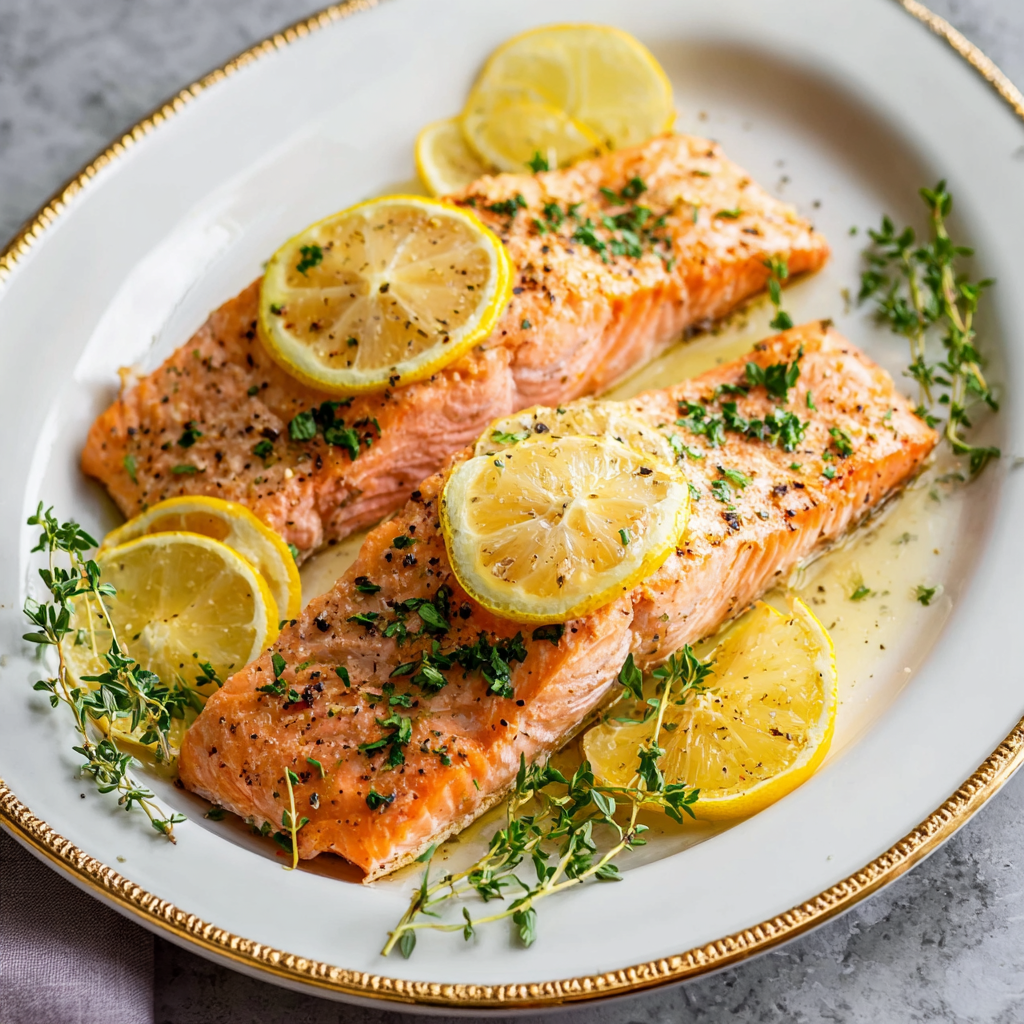
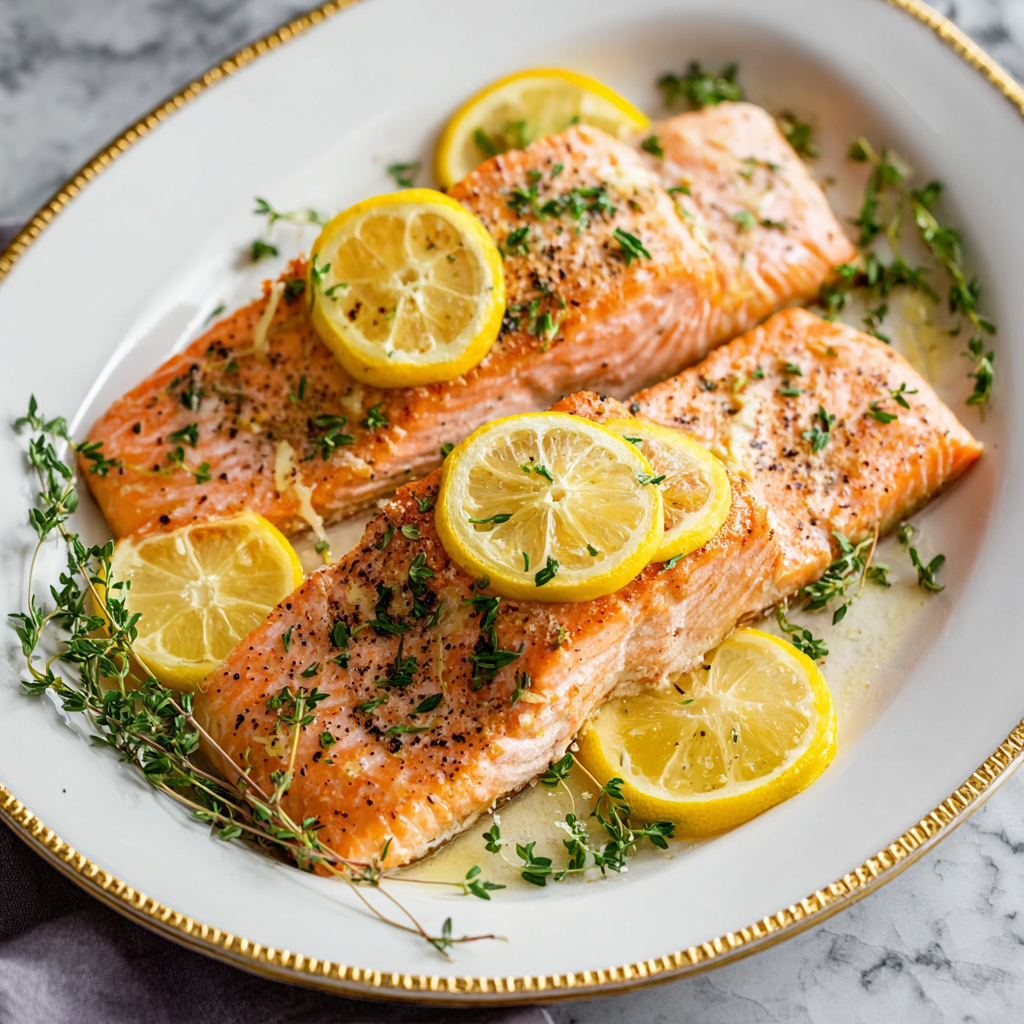
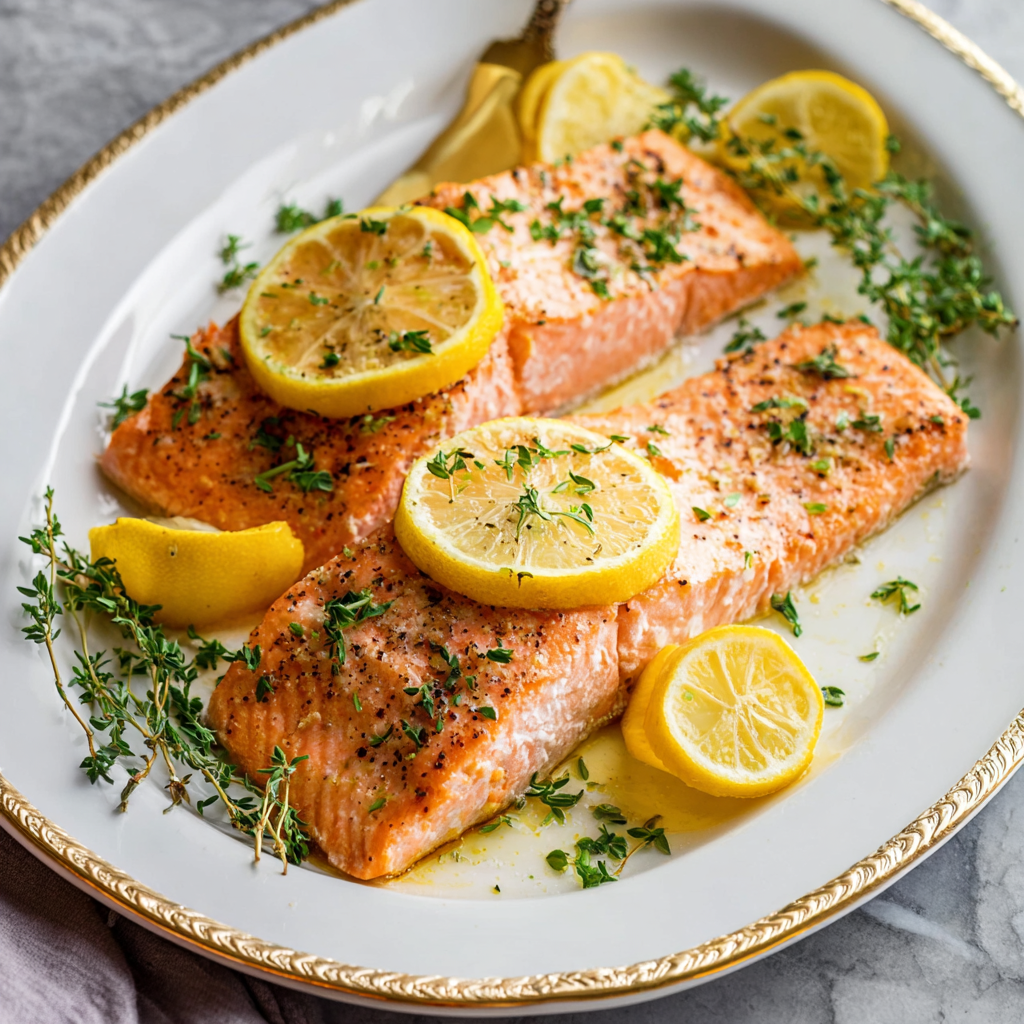
There’s something incredibly satisfying about a perfectly baked salmon, and Lemon Herb Baked Salmon takes it to the next level with bright citrus notes and aromatic fresh herbs. This recipe balances the richness of wild-caught salmon with the zesty freshness of lemons and the earthy depth of herbs like thyme, parsley, or basil. It’s a dish that looks as beautiful as it tastes, making it ideal for weeknight dinners, special occasions, or even entertaining guests.
One of the reasons salmon is so beloved is its natural omega-3 content, which makes it not only delicious but also nutritious. By pairing it with fresh lemon and herbs, you enhance the flavor without adding unnecessary calories or processed ingredients. For tips on selecting the freshest salmon, this guide on buying quality fish is invaluable. For more citrus-inspired seafood recipes, this lemon-based cooking guide provides inspiring ideas.
Lemon Herb Baked Salmon is remarkably simple yet elegant. The method involves seasoning the fish with kosher salt, black pepper, olive oil, and fresh herbs, then baking it until tender and flaky. The lemons add a refreshing tang while keeping the salmon moist throughout the cooking process. Whether you prefer the skin on or off, this recipe produces a delicate, flavorful filet every time. Plus, it’s versatile enough to pair with roasted vegetables, steamed greens, or a simple salad, making it a complete, nutrient-rich meal.
What sets this recipe apart is its accessibility. Even novice cooks can confidently bake salmon that rivals restaurant-quality dishes. At the same time, advanced techniques and flavor variations allow experienced cooks to elevate the dish further, experimenting with marinades, herb combinations, and presentation styles.
2. Basic Recipe: Ingredients and Instructions
Print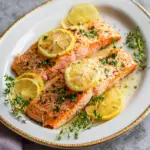
Lemon Herb Baked Salmon Recipe
Description
Tender Lemon Herb Baked Salmon with fresh herbs and zesty lemon. Perfect for quick, healthy, and delicious meals.
Ingredients
- 2-pound side of salmon, boneless (skin on or off, depending on preference)
- 10 sprigs of fresh thyme (optional)
- 2 medium lemons, plus extra for serving
- 2 tablespoons extra virgin olive oil
- 1 teaspoon kosher salt
- ½ teaspoon freshly ground black pepper, plus more to taste
- Finely chopped fresh herbs (parsley or basil preferred)
Instructions
- Preheat Oven: Preheat your oven to 400°F (200°C). Line a baking sheet with parchment paper or lightly oil a baking dish.
- Prepare Salmon: Pat the salmon dry with paper towels. This helps the seasoning stick and ensures even baking.
- Season: Drizzle the olive oil over the salmon and rub evenly. Sprinkle with kosher salt and freshly ground black pepper. Place lemon slices and thyme sprigs (if using) on top of the salmon.
- Bake: Place the salmon in the preheated oven and bake for 15–20 minutes, depending on thickness, until it flakes easily with a fork. Baking time may vary slightly; check after 12 minutes for thinner fillets.
- Add Fresh Herbs: Remove from oven and sprinkle with finely chopped parsley or basil for a burst of color and flavor.
- Serve: Squeeze fresh lemon juice over the salmon before serving. Pair with your favorite sides, such as roasted vegetables or a quinoa salad.
Notes
Skin-on salmon retains more moisture during baking. Remove skin after cooking if preferred.
Avoid overbaking to prevent dry, tough salmon.
Fresh herbs can be adjusted based on taste preference; dill also works beautifully.
3. Advanced Techniques
1. Perfectly Flaky Salmon Every Time
For perfectly flaky salmon, monitor the internal temperature with a kitchen thermometer. Aim for 125–130°F for medium-rare and 135°F for fully cooked. Let it rest for 2–3 minutes before serving to allow residual heat to finish cooking.
2. Infusing Lemon Flavor
Instead of simply slicing lemons, try juicing half of a lemon over the salmon before baking and layering the rest on top. This method ensures a bright citrus flavor permeates the fish without overpowering it.
3. Herb Layering for Depth
Experiment with layering herbs under and on top of the salmon. Thyme, rosemary, or tarragon underneath creates a subtle infused aroma, while parsley or basil on top adds freshness and visual appeal.
4. Crispy Skin Technique
If baking salmon with skin on, ensure the skin side is well-oiled. Broil for the last 2–3 minutes of baking to achieve a crisp, flavorful finish while keeping the flesh moist and tender.
5. Marinade Variations
Create quick marinades with olive oil, lemon juice, garlic, and your favorite herbs for 15–30 minutes before baking. Adding a splash of white wine or soy sauce can enhance umami flavors and produce a restaurant-quality taste.
4. Storage, Shelf Life, and Maintenance Tips
1. Refrigerating Leftovers
Store leftover salmon in an airtight container in the fridge for up to 3 days. Reheat gently in a 300°F oven or enjoy cold over salads to maintain texture.
2. Freezing for Later
Cooked salmon can be frozen for 1–2 months. Wrap tightly in foil or freezer-safe bags to prevent freezer burn. Thaw overnight in the fridge before reheating.
3. Preventing Dryness
Cover salmon loosely with foil while reheating to retain moisture. Avoid high temperatures or prolonged reheating, which can dry out the fish.
4. Meal Prep Tips
Bake multiple fillets ahead of time and store for quick lunches or dinners. Lemon and fresh herbs can be added just before serving for maximum flavor and freshness.
5. Serving and Presentation
Keep leftover herbs and lemon slices separate when storing to maintain color and texture. Garnish just before serving for a visually appealing presentation.
5. Dietary Adaptations and Substitutions
1. Paleo-Friendly Version
This recipe is naturally paleo-friendly. Ensure olive oil is high quality, and avoid processed seasonings. Pair with roasted vegetables for a complete paleo meal.
2. Low-Sodium Option
Reduce salt to ½ teaspoon or skip entirely. Lemon juice and fresh herbs enhance flavor without the need for excess sodium.
3. Keto-Friendly Adaptation
This recipe is keto-approved. Pair with low-carb sides like zucchini noodles or roasted cauliflower for a complete meal.
4. Dairy-Free Option
No modifications needed as the recipe does not use butter or cheese. Olive oil keeps the salmon moist while remaining dairy-free.
5. Herb Variations
Substitute parsley or basil with dill, tarragon, or cilantro to suit different flavor profiles or dietary preferences. Adjust quantities according to taste.
6. FAQs About the Recipe
1. Can I Use Frozen Salmon?
Yes, but thaw completely in the fridge before baking. Pat dry to remove excess moisture for proper seasoning and even cooking.
2. How Do I Prevent Overcooking?
Monitor internal temperature with a kitchen thermometer. Baking at 400°F usually results in perfect doneness within 15–20 minutes for a 2-pound fillet.
3. Can I Make This Ahead of Time?
Season and bake salmon ahead, then store in the fridge. Add fresh herbs and lemon slices just before serving to maintain vibrant flavors.
4. What Sides Pair Well?
Roasted vegetables, quinoa, rice, or fresh salad all complement this lemon-herb salmon. For extra flavor, drizzle leftover pan juices over sides.
5. Is Skin-On or Skin-Off Better?
Skin-on retains moisture and adds flavor, but can be removed after baking if preferred. Crispy skin adds texture and a delicious contrast to tender flesh.
7. Conclusion & Final Thoughts
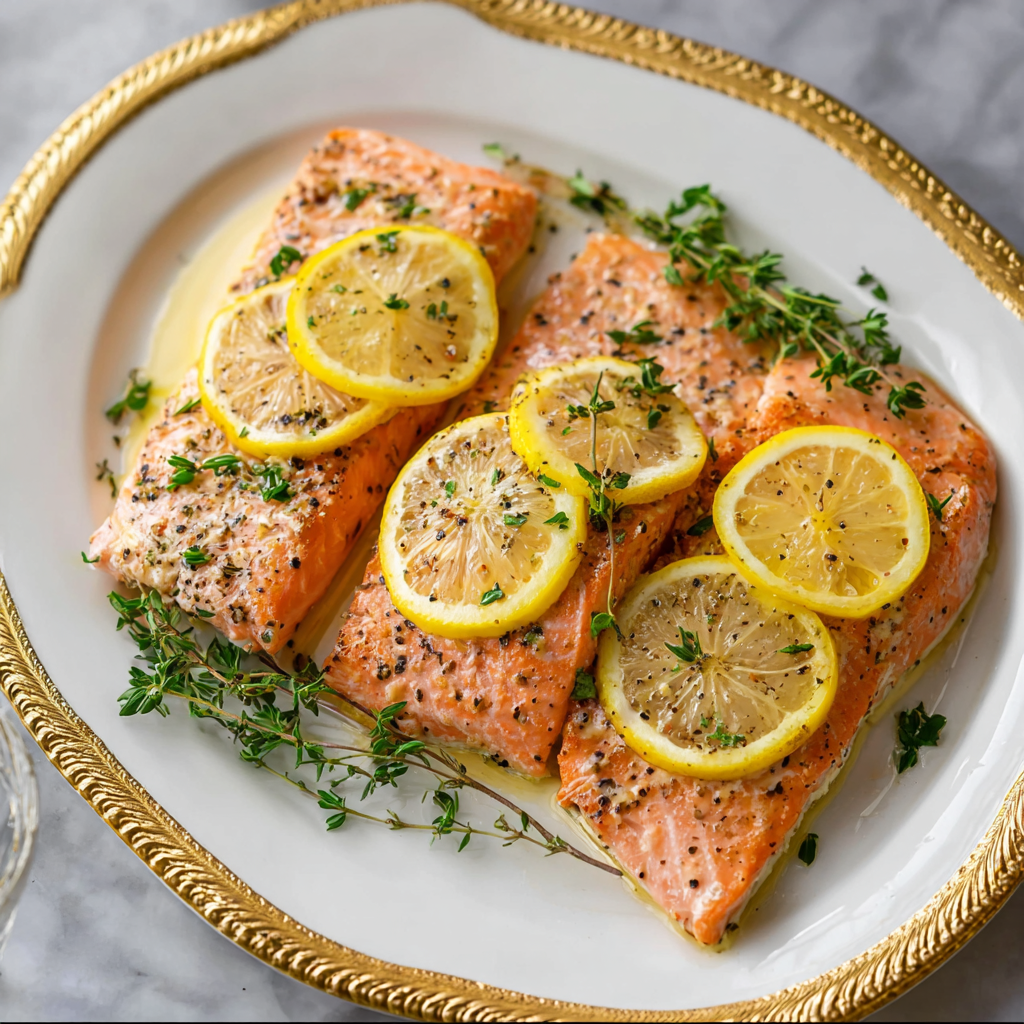
Lemon Herb Baked Salmon is a simple, elegant, and versatile dish that elevates any meal. Its bright citrus notes and aromatic herbs enhance the naturally rich flavor of wild-caught salmon, making it perfect for both everyday dinners and special occasions. The recipe is approachable for beginners yet offers room for creative adaptations for more experienced cooks, from herb layering to citrus marinades and crispy skin techniques.
Beyond taste, this dish is nutrient-packed, providing omega-3 fatty acids, high-quality protein, and essential vitamins. The quick baking method preserves moisture while developing deep, flavorful aromas, demonstrating that healthy meals don’t have to compromise on taste. Meal prepping this recipe saves time without sacrificing quality, and its dietary flexibility allows it to suit paleo, keto, dairy-free, or low-sodium preferences.
Whether served with roasted vegetables, a fresh salad, or a light grain, Lemon Herb Baked Salmon delivers a restaurant-quality experience at home. Its vibrant presentation, delicate texture, and bright, refreshing flavor make it a memorable centerpiece. Mastering this recipe teaches valuable techniques such as proper baking temperatures, flavor layering, and effective use of fresh herbs and citrus, ensuring every meal is both delicious and nutritious.
With its balance of simplicity, elegance, and health benefits, this recipe is sure to become a staple in your cooking rotation. Every bite offers a perfect harmony of flavors—zesty, herbaceous, and satisfyingly rich—proving that wholesome ingredients can create extraordinary culinary experiences.