
1. Introduction to the Recipe
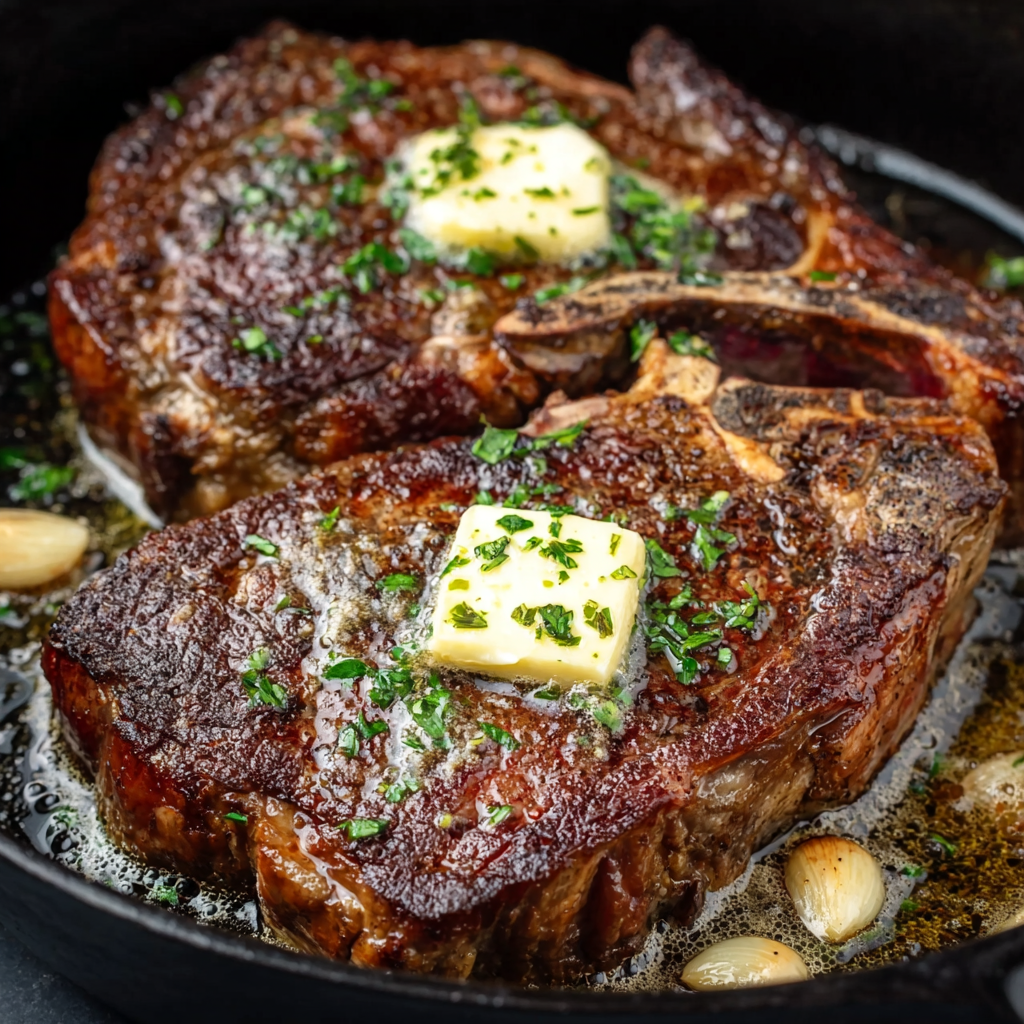
A perfectly cooked Bone-In Ribeye is often considered the gold standard of steak, celebrated for its rich marbling, deep beefy flavor, and melt-in-your-mouth tenderness. When prepared in a cast iron skillet and basted generously with garlic herb butter, this steak transforms into a restaurant-quality entrée right at home. Pan-searing the ribeye creates an unmatched crust—deep, golden, and crisp—while the bone helps the steak retain moisture and intensify flavor during cooking. This method of preparation is ideal for home cooks who want an easy, foolproof technique for achieving steakhouse-level results without the need for a grill or complicated equipment.
The beauty of pan-searing lies in the simplicity of the process and the intensity of flavor it delivers. Using only a handful of ingredients—kosher salt, freshly cracked black pepper, olive oil, garlic, rosemary, thyme, and butter—you can elevate a high-quality ribeye into an unforgettable dining experience. The sizzling hot skillet locks in juices instantly, while the butter-basting step adds a luxurious, aromatic richness that coats every bite. If you’re new to cast iron cooking or want to improve your technique, you can explore cast iron seasoning tips at https://www.lodgecastiron.com and learn about different steak doneness levels at https://www.certifiedangusbeef.com, both of which can deepen your understanding before you attempt the recipe.
What sets a Bone-In Ribeye apart from other cuts is not just its flavor but its versatility. Whether you prefer medium-rare, medium, or well-done, cast iron cooking allows precise control over the final temperature. It’s also a method that adapts well to various aromatics and fats, making it easy to personalize the experience to your taste. If you’re looking for a recipe that is elegant yet effortless, packed with savory depth, and always crowd-pleasing, this Bone-In Ribeye recipe delivers excellence with every seared, buttery bite.
2. Basic Recipe: Ingredients and Instructions
Print
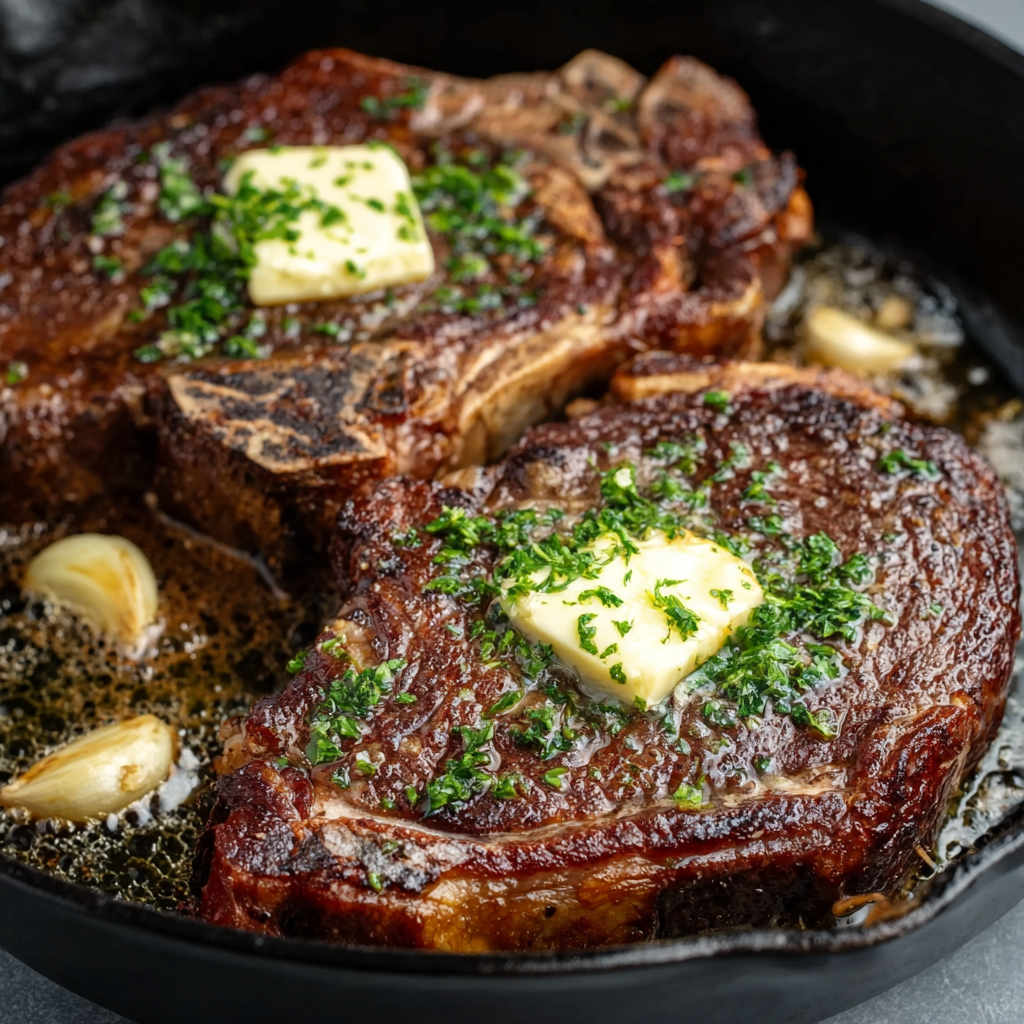
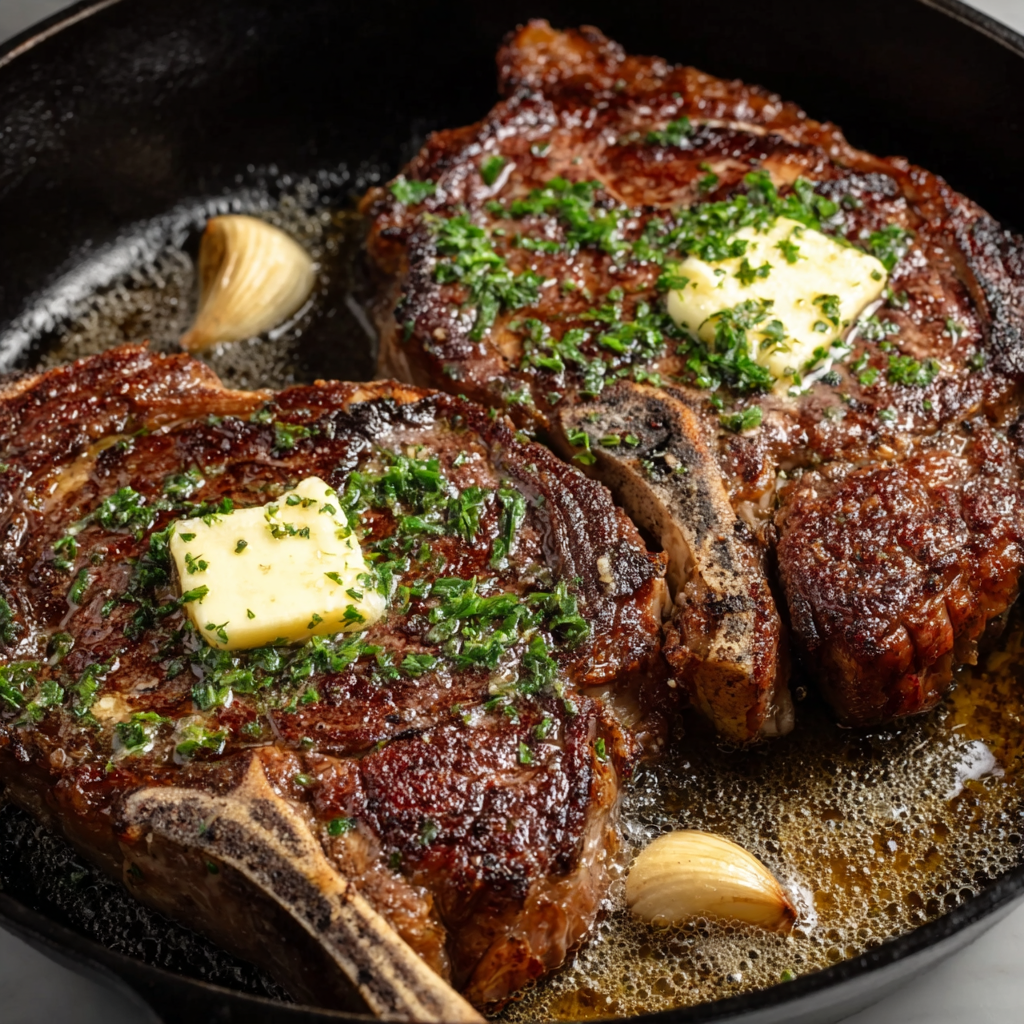
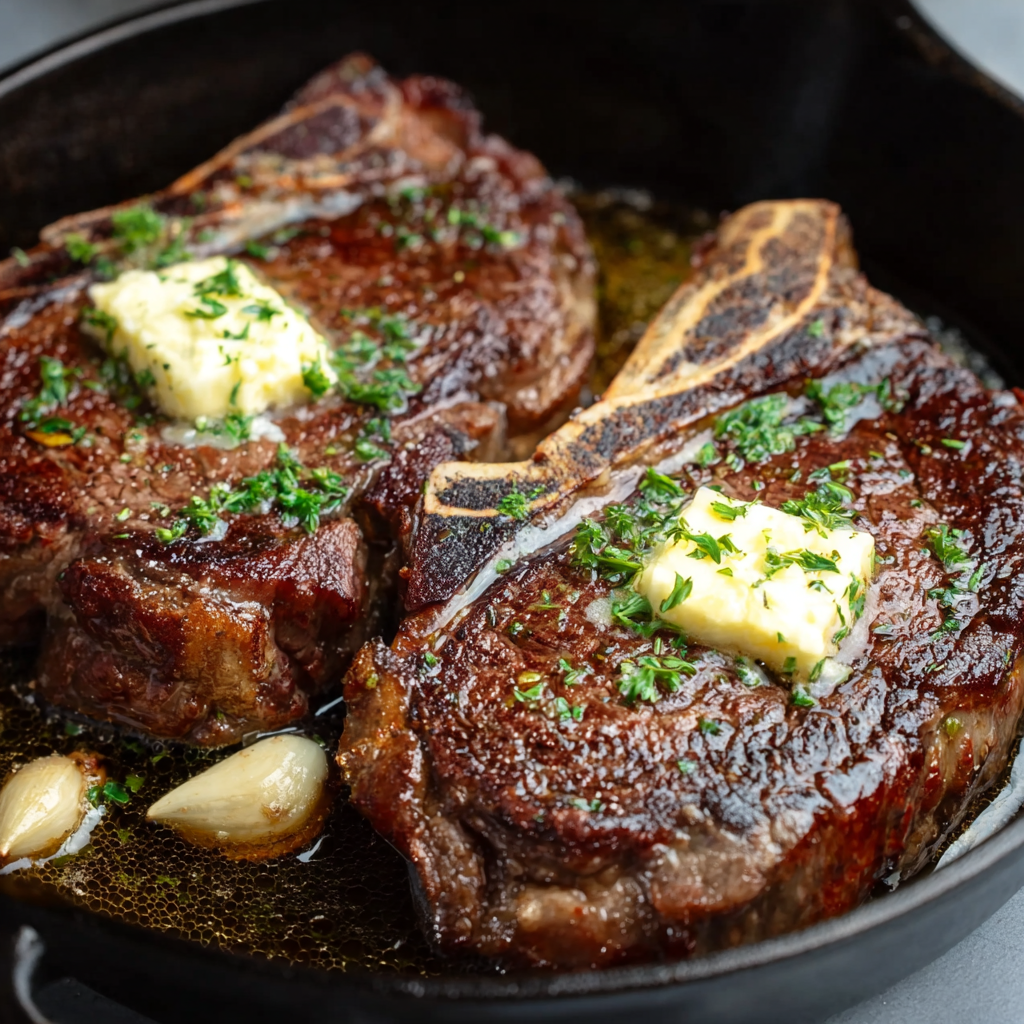
Pan-Seared Bone-In Ribeye Recipe – Cast Iron Butter-Basted Steak
Description
Make this pan-seared Bone-In Ribeye with garlic herb butter for a perfectly juicy, restaurant-quality cast iron steak at home.
Ingredients
- 2 bone-in ribeye steaks (1 ¼ inches thick, ~18 oz each), room temperature
- 2 tsp kosher salt
- ½ tsp black pepper
- 2 tbsp olive oil
- 1 large garlic clove, gently smashed
- 1 fresh rosemary sprig (4–5 inches)
- 3 fresh thyme sprigs (6–7 inches)
- ¼ cup unsalted butter
- Optional Garnish: pat of butter, fresh chopped parsley
Instructions
- Prepare the Steaks
Pat steaks dry with paper towels. Season generously on all sides with kosher salt and black pepper. Allow them to sit at room temperature for 30 minutes. - Heat the Cast Iron Skillet
Heat a cast iron skillet over medium-high heat for 4–5 minutes until extremely hot. Add olive oil and swirl to coat the bottom. - Sear the Ribeyes
Place the ribeye steaks in the skillet, laying them away from you to prevent splattering. Sear for 3–4 minutes without moving them. - Flip and Add Aromatics
Flip steaks and add garlic, rosemary, thyme, and butter to the skillet. - Butter Baste
As the butter melts, tilt the pan slightly and use a spoon to baste the steaks repeatedly for 1–2 minutes. - Cook to Desired Doneness
Continue cooking until internal temperature reaches:- 125°F for rare
- 135°F for medium-rare
- 145°F for medium
Use a meat thermometer for accuracy.
- Rest the Steaks
Transfer steaks to a cutting board and rest for 5–7 minutes to allow juices to settle. - Serve
Garnish with a pat of butter and chopped parsley if desired. Slice and enjoy.
Notes
A dry steak = a better sear. Always blot with paper towels first.
Preheating the cast iron is crucial for a crust. Don’t rush it.
Butter burns quickly—only add it after flipping the steak.
Resting prevents the steak from losing juices when cut.
3. Advanced Techniques
1. Achieving a Deep Steakhouse Crust with the Dry-Brine Method
To take your Bone-In Ribeye to the next level, consider dry-brining the steaks. This technique involves salting the ribeyes 12–24 hours in advance and letting them rest uncovered in the refrigerator. The salt draws moisture to the surface, which then reabsorbs back into the steak, seasoning it deeply. The drying effect also creates a surface that crisps beautifully when seared. This method replicates the signature steakhouse crust, enhancing flavor while ensuring a more tender final texture. It’s a small step that yields surprisingly dramatic improvements.
2. Mastering the Spoon-Baste for Even Butter Distribution
The spoon-baste is more than a dramatic gesture—it’s a temperature control tactic that helps cook the top of the steak without flipping it excessively. When the butter foams, it becomes infused with garlic, rosemary, and thyme. Continually spooning this aromatic fat over the ribeye ensures even heat distribution, accelerates surface browning, and enhances flavor. This technique is especially useful for thick-cut bone-in steaks, which require more controlled heating to maintain even doneness throughout.
3. Reverse Butter Infusion for Deeper Herb Flavor
Instead of adding herbs to the skillet directly, you can infuse the butter beforehand by gently melting it with garlic and herbs in a separate saucepan. Strain the butter and use it exclusively for basting. This method extracts deeper aromatics from the herbs without burning them in the hot skillet. Infused butter elevates the steak’s flavor profile and helps prevent bitter notes caused by overcooked herbs. The result is a cleaner, more refined taste with stronger herb presence.
4. Using Dual-Temperature Control for Perfect Doneness
Managing a thick Bone-In Ribeye requires an understanding of heat zones. Start with high heat to achieve the sear, then reduce the stove to medium or medium-low while basting. This prevents the outside from burning while the interior gently reaches the ideal temperature. Use a digital thermometer and remove the steak when it’s 5 degrees below your target temperature—the carryover heat will finish the job during resting. This approach ensures uniform cooking with zero guesswork.
5. Edge Rendering for a Fully Uniform Crust
One commonly overlooked step is rendering the fat cap along the edges of the ribeye. Holding the steak upright with tongs and pressing the fatty edge to the skillet for 60–90 seconds melts excess fat and crisps the exterior. This prevents chewy edges and enhances flavor as the melted fat coats the pan. Edge rendering creates a balanced, fully developed crust that makes every bite exceptional.
4. Storage, Shelf Life, and Maintenance Tips
1. Best Practices for Refrigerating Leftover Ribeye
Store leftover Bone-In Ribeye in an airtight container and keep it refrigerated for 3–4 days. To preserve texture, place parchment paper between slices to prevent sticking. Avoid storing in aluminum foil, which traps moisture and softens the crust. Reheat gently to avoid drying the meat, as ribeyes have high fat content and can toughen if reheated too hot or too fast.
2. Freezing Cooked Ribeye Without Losing Quality
If you need to freeze your ribeye, wrap it tightly in plastic wrap, then place it in a freezer-safe bag to prevent freezer burn. Label with the date and store for up to three months. When reheating, thaw slowly in the refrigerator for 12–24 hours before warming. Freezing is ideal when you want to prep in advance or salvage leftovers while retaining meat quality.
3. Reheating Without Overcooking the Steak
The best reheating method is the low-and-slow oven technique. Place the steak on a wire rack over a baking sheet and heat at 250°F for 10–15 minutes, or until warmed through. For a quick crust refresh, finish with 30 seconds per side in a hot skillet. Avoid the microwave unless absolutely necessary—it causes toughness and uneven heating.
4. Maintaining a Crisp Crust After Storage
Steaks lose their crusty texture in the fridge due to moisture buildup. To restore crispness, lightly coat a skillet with a thin layer of high-heat oil and heat until shimmering. Sear the steak for 30–45 seconds per side. This reheats the fat and re-crisps the protein structure without overcooking the interior.
5. Using Leftover Ribeye Creatively
Leftover ribeye is incredibly versatile. Slice it thinly for steak sandwiches, dice it for breakfast hash, or incorporate it into quesadillas or steak salads. The bone can be used to add richness to soups or stocks. These methods help reduce food waste while creating new, delicious meals.
5. Dietary Adaptations and Substitutions
1. Low-Sodium Adaptation
To reduce sodium, decrease the kosher salt or use a salt substitute. Rely more on aromatics like garlic, rosemary, thyme, and pepper for flavor. Cooking the steak with high-heat techniques naturally builds savory depth without relying on added salt, making it suitable for sodium-conscious diets.
2. Dairy-Free Version
The butter-basting step can be replaced with dairy-free alternatives such as ghee-flavored coconut oil, avocado oil, or vegan butter designed for high heat. These substitutes maintain richness while accommodating lactose intolerance or vegan preferences. Ensure your chosen fat has a high smoke point to avoid burning.
3. Keto and Low-Carb Friendly
A Bone-In Ribeye is inherently keto-friendly due to its high fat content and low carbohydrate profile. To enhance this, pair the steak with keto-approved sides like roasted vegetables, cauliflower mash, or sautéed spinach. Choose unsalted butter or ghee for basting to keep it clean and compliant with strict keto guidelines.
4. Whole30 and Paleo Adaptation
For Paleo or Whole30, avoid using butter and swap it for clarified butter (ghee) or avocado oil. Ensure that seasonings contain no additives or sugars. These compliant fats still provide a delicious basting medium that enhances the natural flavors of the steak.
5. Herb and Spice Variations for Dietary Needs
If you prefer to avoid nightshades or specific herbs, try substituting rosemary and thyme with sage, oregano, or bay leaves. Each herb creates a different aromatic profile. This allows individuals with sensitivities to tailor the recipe without compromising flavor.
6. FAQs About the Recipe
1. How do I know when the pan is hot enough?
A properly heated cast iron skillet is essential. After 4–5 minutes of heating, add a drop of water—if it skitters rapidly across the surface, the pan is ready. A hot pan ensures a clean sear and prevents sticking. Underheating leads to steaming instead of searing, while overheating risks burning the exterior before the interior cooks properly.
2. Do I need to use cast iron, or can I use a different skillet?
Cast iron is ideal because it retains heat exceptionally well and creates a superior crust. However, stainless steel skillets can also work if preheated properly. Avoid nonstick pans—they can’t handle the high heat required for a steakhouse-style sear and may degrade from the temperatures needed.
3. Why must the steak be at room temperature before cooking?
Bringing the steak to room temperature ensures even cooking. A cold steak will sear on the outside while remaining overly cool inside, leading to a thick band of gray meat. Room temperature steaks cook more uniformly, reduce cooking time, and yield a more consistent doneness throughout.
4. Should I oil the steak or the pan?
Either works, but adding oil to the pan ensures the surface is evenly coated and properly heated before the steak touches it. Use oils with high smoke points such as avocado, canola, or olive oil. Avoid butter at the initial sear, as it burns too quickly.
5. How long should the steak rest after cooking?
Resting is crucial. Allowing the steak to rest for 5–7 minutes enables the juices to redistribute throughout the meat. Cutting too early results in juices flooding the cutting board instead of staying inside the steak. Resting maintains a tender, juicy texture.
7. Conclusion & Final Thoughts
A well-prepared Bone-In Ribeye is one of life’s simplest culinary pleasures—full of bold flavor, luxurious texture, and irresistible aroma. This pan-seared method showcases everything that makes ribeye extraordinary: the marbling melts into the meat, the bone enhances savoriness, and the butter-basting step infuses deep, aromatic richness into every bite. Cooking your ribeye in cast iron elevates home dining to steakhouse status, giving you impeccable crust, controlled doneness, and indulgent flavor with minimal ingredients and straightforward steps.
What truly makes this recipe exceptional is its balance of simplicity and sophistication. Anyone—from novice cooks to seasoned home chefs—can master this method and achieve consistent, stunning results. With only a few quality ingredients and a reliable skillet, you can transform a high-quality cut of beef into a memorable meal worthy of special occasions, date nights, or weekend indulgence. The advanced techniques offered here give you full control over crust formation, fat rendering, seasoning depth, and doneness—turning a basic pan-seared ribeye into a signature dish that reflects your personal cooking style.
Whether served as the star of a festive dinner, paired with elegant sides like garlic mashed potatoes or roasted vegetables, or enjoyed on its own with a simple garnish of butter and herbs, a pan-seared Bone-In Ribeye brings unmatched satisfaction. It’s a recipe that rewards attention to detail but remains wonderfully approachable, proving that exceptional food doesn’t need to be complicated. With every juicy, tender, butter-enriched bite, you’ll be reminded of why this steak remains a timeless favorite. Enjoy mastering this classic and savor the many delicious meals it will inspire.