
1. Introduction to the Recipe
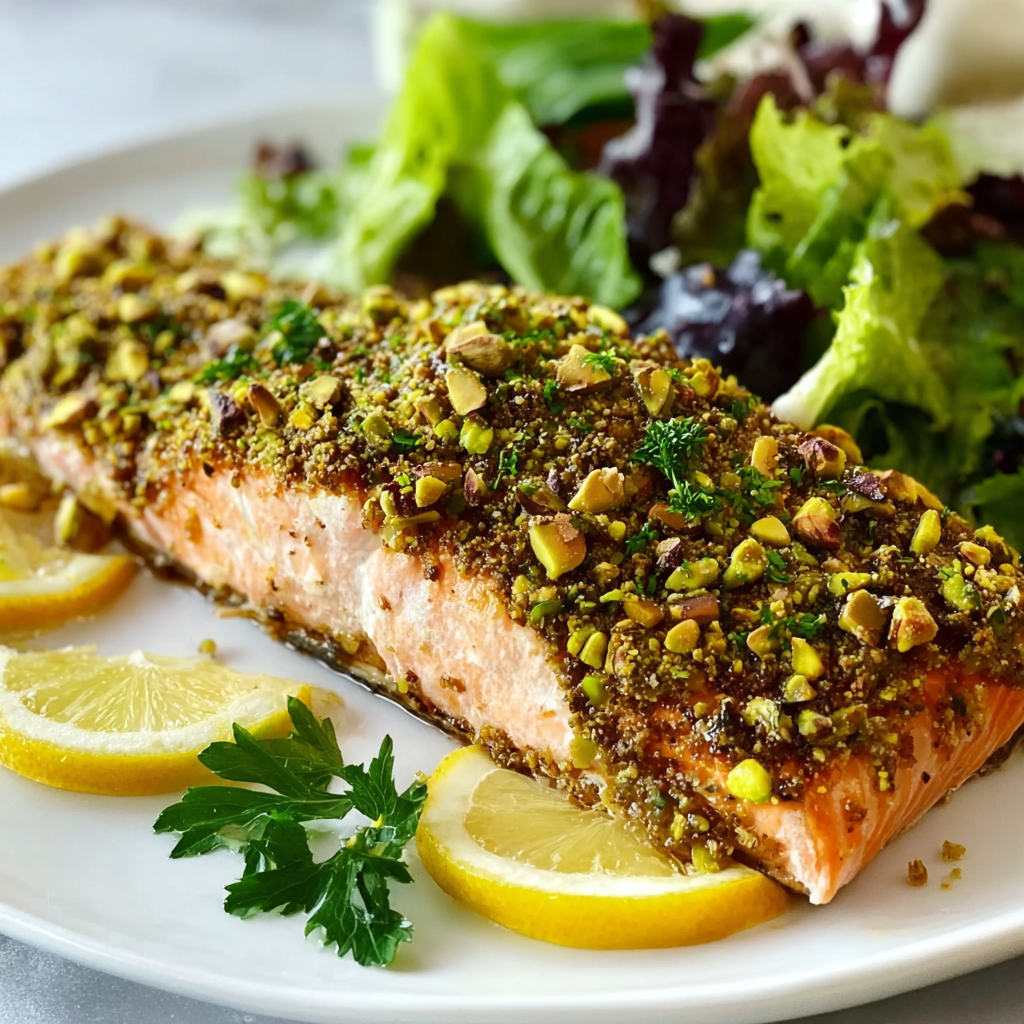
If you’re looking for a dish that feels elegant yet approachable, Pistachio Crusted Salmon is the perfect answer. This recipe combines tender, flaky salmon with a crunchy pistachio coating and a subtle glaze of Dijon mustard and maple syrup. The result is a beautifully balanced dish that delivers savory richness, gentle sweetness, and satisfying texture in every bite. It’s impressive enough for dinner guests, yet simple enough to prepare on a busy weeknight.
Salmon is already a favorite for its health benefits and versatility, but adding a pistachio crust elevates it into something truly special. Pistachios bring a natural nuttiness, a hint of salt, and a vibrant green color that makes this dish visually striking. When paired with the tangy sharpness of Dijon mustard and the mellow sweetness of maple syrup, the flavors complement rather than compete, allowing the salmon to remain the star. The skin-on fillets also help keep the fish moist while adding an optional crispy element if cooked properly.
What makes Pistachio Crusted Salmon especially appealing is how adaptable it is. It works equally well baked or pan-roasted, pairs beautifully with roasted vegetables, rice, or salads, and suits both casual family meals and more refined occasions. If you’re interested in learning more about cooking salmon perfectly, this guide to how to cook salmon is a helpful reference. For a deeper look into the nutritional benefits of pistachios, this overview of pistachio nutrition complements the recipe nicely.
With minimal ingredients and maximum payoff, Pistachio Crusted Salmon is a recipe you’ll come back to again and again—reliable, flavorful, and effortlessly impressive.
2. Basic Recipe: Ingredients and Instructions
Print
Pistachio Crusted Salmon: Sweet, Savory, and Perfectly Crisp
Description
Elegant Pistachio Crusted Salmon with Dijon and maple syrup—crispy, flavorful, and easy enough for weeknights or entertaining.
Ingredients
- 16 oz salmon fillets, skin-on (2 × 8 oz fillets)
- ¼ cup roasted, salted pistachios, finely chopped
- Optional: an extra ⅛ cup pistachios for heavier coating
- 3 teaspoons coarse-ground Dijon mustard
- 2 teaspoons maple syrup
- ¼ teaspoon salt (or to taste)
- ¼ teaspoon black pepper (or to taste)
Instructions
- Preheat the oven
Preheat your oven to 200°C (400°F). Line a baking sheet with parchment paper or lightly oil it. - Prepare the pistachios
Finely chop the pistachios using a knife or food processor. Avoid over-processing; you want texture, not paste. - Season the salmon
Pat the salmon fillets dry with paper towels. Season lightly with salt and pepper. - Mix the glaze
In a small bowl, combine the Dijon mustard and maple syrup until smooth. - Coat the salmon
Spread the mustard-maple mixture evenly over the top of each salmon fillet. Press the chopped pistachios firmly onto the glaze to form a crust. - Bake the salmon
Place the fillets skin-side down on the baking sheet. Bake for 12–15 minutes, depending on thickness, until the salmon flakes easily with a fork. - Optional broil
For extra crunch, broil for 1–2 minutes at the end, watching closely to prevent burning.
Notes
Keep pistachios finely chopped for better adhesion.
Do not over-salt—the pistachios already add saltiness.
Let salmon rest for 2 minutes before serving for optimal juiciness.
3. Advanced Techniques
Achieving the Perfect Pistachio Crust
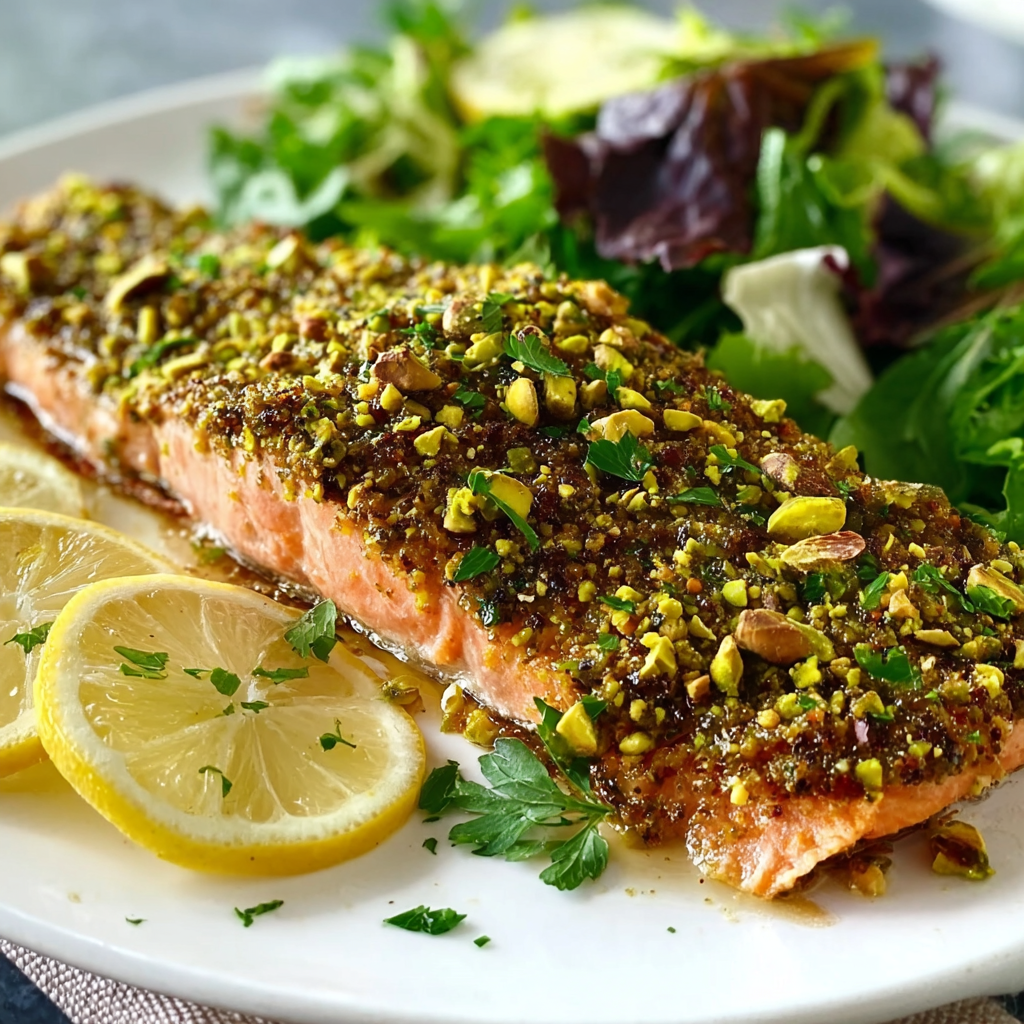
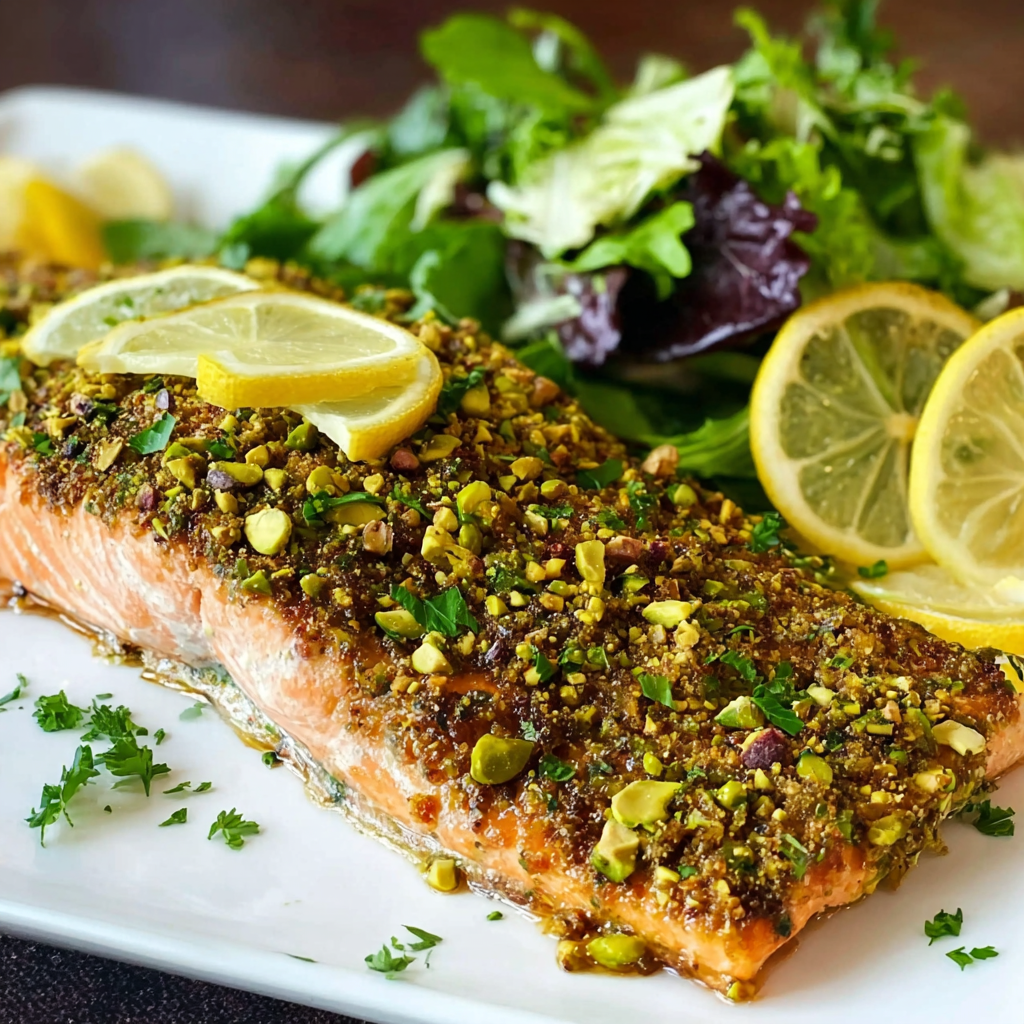
The key to a flawless pistachio crust lies in balance. Finely chopped nuts adhere better and cook evenly, while larger pieces may fall off or burn. Press the pistachios gently but firmly into the mustard-maple layer so they stick during baking. If you want extra crunch, mix a tablespoon of breadcrumbs with the pistachios for structure without overpowering the nut flavor.
Mastering Salmon Doneness
Salmon cooks quickly, and overcooking is the most common mistake. Aim for an internal temperature of about 52–54°C (125–130°F) for medium, or remove the salmon just as it begins to flake. Residual heat will finish the cooking, keeping the fish moist and tender.
Balancing Sweet and Savory Flavors
The ratio of Dijon to maple syrup is crucial. Dijon provides sharpness, while maple syrup softens the acidity and helps the crust caramelize. Adjust slightly to taste, but avoid overpowering the salmon’s natural flavor.
Enhancing Texture with Dual Cooking Methods
For a restaurant-style finish, sear the salmon skin-side down in an oven-safe skillet for 2–3 minutes before transferring to the oven. This crisps the skin while allowing the pistachio crust to bake gently.
Using High-Quality Ingredients
Fresh salmon and good-quality pistachios make a noticeable difference. Avoid stale nuts, as they dull the flavor and aroma of the dish.
4. Storage, Shelf Life, and Maintenance Tips
Refrigerating Leftovers
Store leftover Pistachio Crusted Salmon in an airtight container in the refrigerator for up to 2 days. Allow the salmon to cool completely before storing to prevent condensation.
Reheating Without Drying
Reheat gently in a 160°C (325°F) oven for 8–10 minutes, loosely covered with foil. Avoid microwaving, as it softens the crust and dries the fish.
Freezing Considerations
While salmon can be frozen, the pistachio crust may lose some texture. If freezing, wrap tightly and consume within one month for best quality.
Serving Cold
Leftover salmon can be flaked and served cold over salads or grain bowls. The pistachio crust still adds flavor and texture.
Food Safety Awareness
Always discard salmon with an off smell or slimy texture. Proper refrigeration ensures both safety and flavor.
5. Dietary Adaptations and Substitutions
Nut-Free Alternative
Replace pistachios with crushed pumpkin seeds or sunflower seeds for a nut-free version that still offers crunch and flavor.
Dairy-Free and Gluten-Free Friendly
This recipe is naturally dairy-free and gluten-free, making it suitable for many dietary needs without modification.
Lower-Sugar Option
Reduce maple syrup slightly or substitute with a sugar-free maple-style syrup to lower overall sugar content.
Keto-Friendly Adaptation
Replace maple syrup with a keto-approved sweetener like monk fruit syrup and ensure pistachios fit your carb goals.
Alternative Fish Options
This crust works beautifully with trout, cod, or halibut, though cooking times will vary based on thickness.
6. FAQs About the Recipe
Can I Use Skinless Salmon?
Yes, skinless salmon works well, though skin-on helps retain moisture and adds flavor. Adjust cooking time slightly.
Why Is My Crust Falling Off?
This usually happens if the pistachios are too large or not pressed firmly enough into the glaze.
Can I Pan-Fry Instead of Bake?
Baking is preferred to protect the nut crust, but pan-roasting with gentle heat can work.
Is This Recipe Good for Meal Prep?
It’s best fresh, but leftovers can be used creatively in salads or wraps.
What Should I Serve With It?
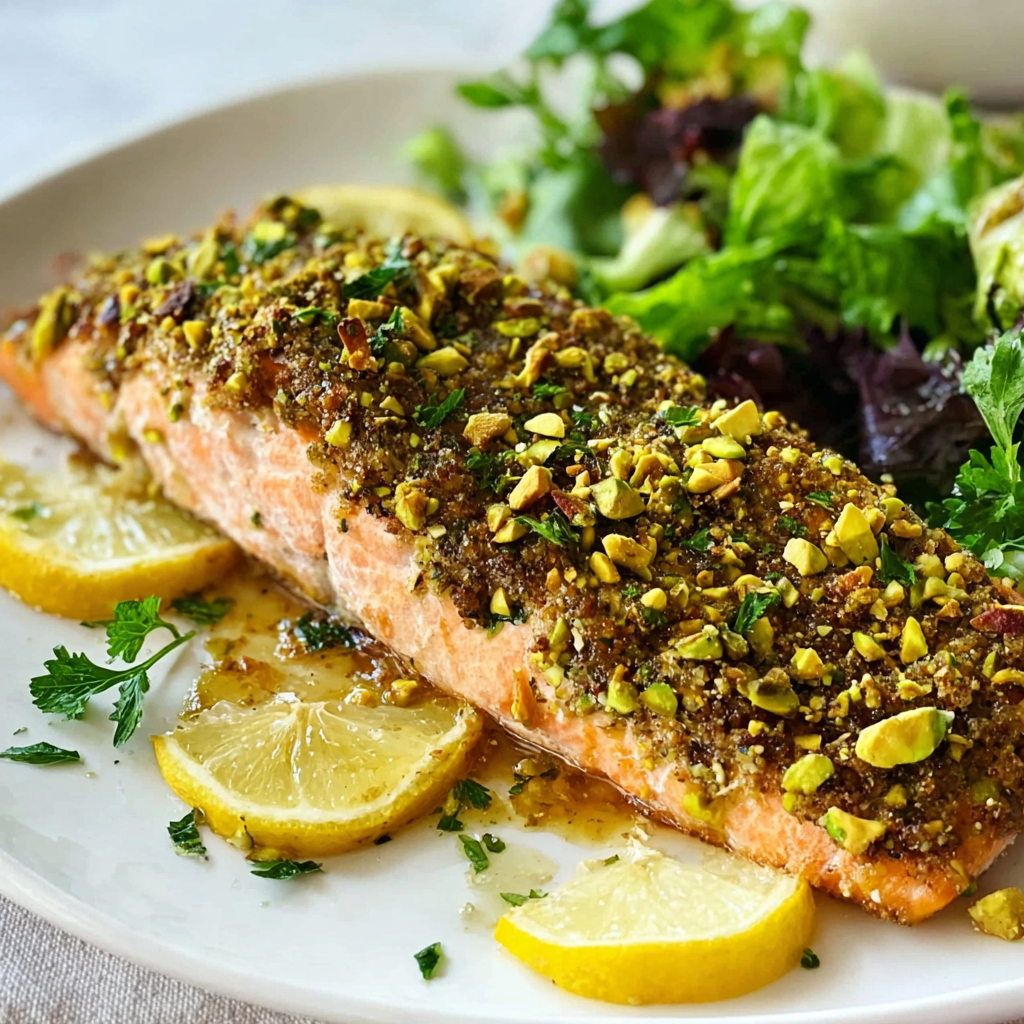
Roasted vegetables, quinoa, wild rice, or a citrus salad pair beautifully with Pistachio Crusted Salmon.
7. Conclusion & Final Thoughts
Pistachio Crusted Salmon is a shining example of how simple ingredients can create a dish that feels refined, balanced, and deeply satisfying. The combination of tender salmon, crunchy pistachios, and a sweet-savory Dijon glaze delivers layers of flavor without unnecessary complexity. It’s a recipe that respects the natural quality of the fish while enhancing it with texture and contrast.
Whether you’re cooking for family, entertaining guests, or simply treating yourself to a nourishing meal, this dish fits the occasion effortlessly. It’s visually appealing, nutritionally sound, and flexible enough to adapt to different diets and preferences. From weeknight dinners to special celebrations, Pistachio Crusted Salmon consistently delivers reliable, elegant results.
Once you’ve mastered this recipe, it’s likely to become a staple in your kitchen—proof that thoughtful technique and quality ingredients can transform everyday cooking into something truly memorable.